



Borg BL2901SCECP Mechanical Digital Lock - Satin Chrome - Anti-Ligature - EasiCode Pro
At A Glance
 At A Glance


 DISPATCHSame Day Before 11am
 PIN Code (Keypad Face)
  Lever Face - No Code
  Key Override
(Not Fitted)
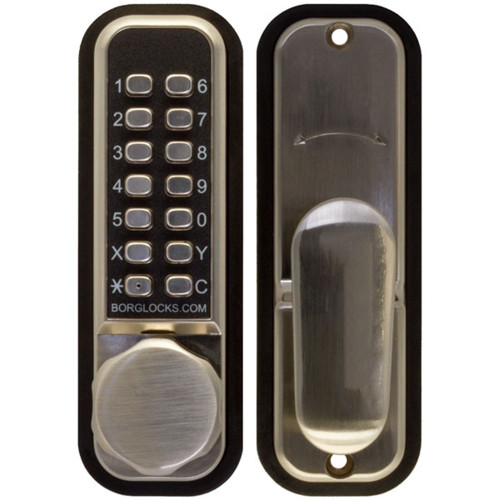
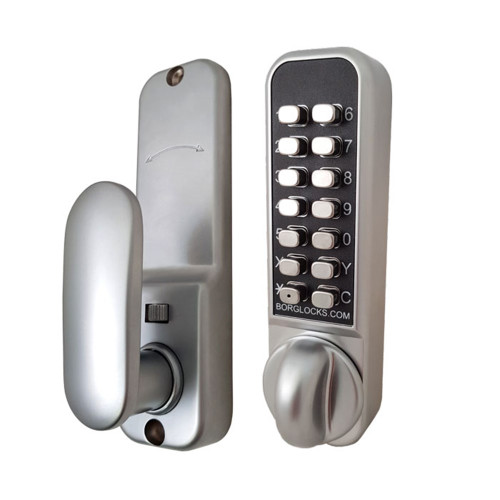
The Borg BL2901SCECP is a fully mechanical digital lock from the Borg BL2900 ECP series, purpose-built for managed care environments where ligature risk must be controlled. It pairs an anti-ligature knob on the keypad face with a standard lever handle on the opposite face. Because it is a mechanical digital lock, it needs no batteries, no mains power and no electronics - every mechanism is driven entirely by the keypad button actions. It accepts a single PIN from over 4,000 possible combinations and carries Borg's EasiCode Pro on-door code change system.
The two-sided design is the key to how this lock works in managed care settings. The keypad face (keypad plus anti-ligature knob) faces the patient or at-risk occupant. The anti-ligature knob has a smooth, rounded profile with no protrusions or attachment points that could support a ligature, and it only turns after the correct PIN has been entered. The lever face operates freely without a code and faces the staff or controlled side of the door.
In a typical mental health facility patient room, the keypad and anti-ligature knob face into the room: a care worker enters freely using the corridor-side lever, and exits by entering the PIN and turning the knob from inside. The occupant sees only the smooth knob and cannot operate the lock without the PIN. In a restricted service area - a cleaners cupboard, nurses station or ward kitchen - the orientation reverses: the anti-ligature keypad face addresses the common corridor where patients move freely, and the lever sits inside the room so staff exit without a code. The lock is cycle tested to 50,000 operations, rated for internal light to medium use, suits timber and composite doors 35-54mm thick, and is not weather resistant or rated for external installation.
Usually same day if ordered before 11am AEST (excluding weekends and Qld public holidays).

The BL2901SCECP has an anti-ligature knob on the keypad face. The smooth, rounded knob eliminates protrusions, gaps and attachment points that could support a ligature. This face installs toward the at-risk occupant - the patient room interior in a mental health facility, or the common corridor in a restricted service area such as a cleaners cupboard. The opposite face carries a standard lever, accessible to staff only. Borg also makes an anti-ligature external gate lock - the BL3175 back-to-back gate lock with key override - for secure outdoor areas in the same facilities.

Suited to internal office doors, server rooms, secure units and managed environments where anti-ligature hardware is required.

For heavy-duty requirements, consider the Lockwood 3572DX, Borg BL7701 or Carbine CDL7200 - our guide to heavy duty mechanical digital locks explains what separates them.

The access code changes directly on the installed lock in about 30 seconds - no tools, no lock removal, no programming devices. See the code change section below for how it works and how the same block pin can lock the code down entirely.
 Key Features
- Fully mechanical operation - no batteries, no electronics and no mains power required.
- Keypad face: anti-ligature knob with numbered keypad - smooth rounded knob profile, no ligature attachment points; the knob operates only after the correct PIN is entered.
- Lever face: standard lever handle - operates freely without a code; installed on the staff-accessible side.
- Keypad face installs toward the at-risk occupant; lever face installs toward the staff or controlled side - see the orientation notes in Additional Information.
- EasiCode Pro on-door code change - the code updates while the lock stays fitted to the door, without tools.
- No mechanical key override - entry via PIN on the keypad face or freely via the lever face; no cylinder or keyway is fitted. If a key override is required, the BL2701SCECP is the keyed sibling.
- Over 4,000 unique PIN combinations - one active code at a time; button order does not matter, only the combination pressed.
- 14-button keypad: 12 coded buttons, 1 clear button and 1 dedicated EasiCode Pro code change button.
- Anti-thrust deadlocking latch - automatically deadlocks when the door closes and resists forced latch retraction with a card or flexible tool. Our latch vs bolt guide explains why self-latching matters in managed environments.
- Fixed 60mm backset; 12mm latch bolt projection.
- Removable holdback function on the lever face - the latch can be held retracted for free passage during service periods, and the holdback is removable where policy prohibits it. See passage mode vs holdback mode.
- Fully reversible - suits left-hand and right-hand door installations, changed on site.
- Cycle tested to 50,000 operations.
- Cast housing construction with stainless steel buttons; satin chrome finish.
- Suits internal timber and composite doors 35-54mm thick on the included fixings.
- Code change block pin included - inserted, it disables the external code change function entirely, preventing keypad-side code changes without lock removal.
Access Methods
 App / Bluetooth
 Changing the Code - EasiCode Pro
EasiCode Pro is Borg's on-door code change system. With the door open and the current code known, the change takes about 30 seconds: enter the existing code, insert the code change key into the hole in the * button, press C to clear, enter the new code, release the key and press C to set. Test the new code five times with the door open before closing it. The full 8-step procedure - including spindle fitting notes - is in the EasiCode Pro Instructions V4 (PDF), and our blog walks through the same procedure with photos: the ECP steps, and how long each method really takes.
In managed care environments this matters operationally: codes rotate at every change of room occupant, so a 30-second on-door change instead of a 10-15 minute bench strip-down is the difference between codes actually being rotated and codes staying stale. A spare EasiCode change key (BL2000ECPCK) is worth keeping at the nurses station - see why the change key matters.
The included block pin has a second job: inserted permanently, it disables the external code change function entirely, so the code cannot be changed at the keypad without removing the lock. Useful where only authorised maintenance staff may change codes.
 What's in the Box
- 1 x keypad assembly with anti-ligature knob
- 1 x lever handle assembly with holdback function
- 1 x 60mm deadlocking tubular latch assembly
- 1 x strike plate
- 1 x EasiCode Pro on-door code change mechanism
- 1 x code change block pin (used during code change; can also disable the external code change function)
- 1 x set of fixings (includes 80mm and 100mm flat bladed spindles)
- 1 x installation instructions
Suitable Uses
- Mental health facilities and psychiatric wards - keypad face installed into the patient room; care workers enter freely via the lever from the corridor and exit using the PIN.
- Hospital and aged care restricted service areas - cleaners cupboards, nurses stations and ward kitchens, with the anti-ligature keypad face toward the common corridor.
- Correctional facilities, secure residential units and managed care environments.
- NDIS Specialist Disability Accommodation (SDA) requiring ligature-resistant hardware - our NDIS and disability housing lock guide covers the wider hardware picture for these projects.
- Internal office doors, server rooms and computer rooms requiring PIN access control on one side.
- Any internal access point where a smooth, tool-free code change between occupants is required - browse the full Digital Mechanical Locks range, or start with the Buyer's Guide chapter on choosing a mechanical digital lock.
 Available Finish Options
 Satin Chrome
(This Product)
STK BL2901SCECP
Finish selection does not affect functionality, compliance, or performance.
 BL2000 ECP Series - Product Family
This product (bold row) is the only anti-ligature model in the family. All models share the BL2000 ECP coding chamber and the EasiCode Pro on-door code change system.
 Accessories and Spare Parts
The BL2901SCECP sits on Borg's 2000-series service-part platform, and Terry's stocks the parts that keep these locks in service for decades - one reason a genuine Borg outlasts hardware store imitations. Because this is the anti-ligature model, confirm any part that touches the keypad or knob assembly with Terry's before ordering.
The BL2201KSCECP replacement keypad carries a standard knob, not the smooth anti-ligature knob fitted to this lock. Substituting it on an anti-ligature installation removes the very protection the BL2901 is specified for. No anti-ligature keypad-only spare is listed in the catalogue - if the keypad assembly on a BL2901 needs replacing, contact Terry's to source the correct anti-ligature part before ordering anything else.
The complete parts diagram for this platform is in the Borg 2000 Series Spare Parts Reference (PDF), and the wider spares story - change keys, tumblers and when to replace them - is covered in our spares guide.
 Full Specifications
 Dimensions


 Frequently Asked Questions

The lever installs on the staff-accessible side - not the side the at-risk person can reach. In a mental health patient room, the keypad and anti-ligature knob face into the room: the patient sees only the smooth, rounded knob, with no protrusions or gaps that could support a ligature, while the lever sits on the corridor side for care workers. In a restricted service area such as a cleaners cupboard, the orientation reverses - the anti-ligature keypad face addresses the common corridor where patients move, and the lever is inside the room for staff.

In a patient room installation the lever faces the corridor. A care worker enters by operating the lever - no code required. To exit, the care worker enters the PIN on the keypad and turns the anti-ligature knob from inside the room. The occupant cannot operate the lock without the PIN and cannot attach anything to the smooth knob.
No. There is no cylinder, keyway or key override on this model - entry is by PIN on the keypad face, or freely via the lever face. If your facility requires a key override, the BL2701SCECP pairs the same ECP chamber with a Silca YA5 6-pin cylinder (note: standard knob, not anti-ligature).
The code changes directly on the installed lock using the dedicated ECP button and the supplied change key - about 30 seconds, no tools, no lock removal. Full instructions are in the EasiCode Pro Instructions V4 (PDF), and the step-by-step with photos is in our code changing guide.

No. The BL2901SCECP is a fully mechanical digital lock - every internal mechanism is driven by the physical action of the keypad buttons. No electricity, batteries or wiring at any point, which is exactly why the platform suits institutional doors: nothing to flatten, corrupt or reboot. For the broader picture, see what a mechanical digital lock is and Chapter 10 - Brand Profiles.
 Additional Information
The BL2901SCECP has an anti-ligature knob on the keypad face only. The lever face carries a standard lever and is not an anti-ligature surface. The lock must be installed so the keypad face (anti-ligature knob) addresses the at-risk occupant and the lever face addresses the staff or controlled side. Anti-ligature hardware requirements vary by facility type and applicable standards - confirm the BL2901SCECP meets the specific ligature-risk classification required before ordering, and assess all other hardware in the same room or corridor (hinges, closers, strike plates, furniture) for ligature compliance. Confirm installation orientation with the facility's clinical or safety team before proceeding. Broader access-hardware guidance for disability and managed housing is in the DDA options section of our heavy duty guide.
EasiCode Pro replaces the older method of removing tumblers from the back of the keypad - a process that took 10 to 15 minutes at a bench with the lock off the door. With EasiCode Pro the code changes in approximately 30 seconds using the dedicated button and change key while the lock stays fitted. In managed care environments this lets staff rotate codes between occupants without a maintenance call-out. The same block pin can also be inserted to permanently disable the external code change function - useful where the code must be locked down to authorised personnel only. See the Buyer's Guide section on code changing for how ECP compares with bench methods across the range.

The BL2901 uses a deadlocking tubular latch with an anti-thrust pin. When the door closes fully, the latch bolt automatically deadlocks - preventing forced retraction with a card or flexible tool. For the deadlocking function to engage reliably, the strike plate must be correctly aligned and the latch bolt must fully seat into the strike. Confirm measurements with our guide to measuring your lock backset before drilling, and see when a latch is the right choice.
The keypad has 12 coded buttons providing over 4,000 unique combinations, with a single active code at any time. On a Borg mechanical keypad the order of presses does not matter - only the combination of buttons pressed counts. In managed facilities, change the code when staff access lists change, after any suspected compromise, and at every change of room occupant. Avoid predictable single-row combinations. The block pin can prevent unauthorised code changes at the keypad, and the honest limitations of a single-code platform are covered in our mechanical digital lock explainer.

Borg Locks are warranted against defects in materials and workmanship for 12 months from the date of sale. The warranty does not cover damage resulting from misuse, vandalism, or improper installation. Locks must not be dismantled; dismantling the lock voids the warranty. Warranty claims for products purchased through Terry's are managed by Terry's - contact the team directly to initiate a claim. This warranty operates alongside and does not limit your rights under the Australian Consumer Law.
Borg BL2901SCECP - FAQ, Specifier and Owner's Guide
Everything below helps you specify, install, operate and service the BL2901SCECP anti-ligature lock. For general mechanical digital lock questions see Buyer's Guide Chapter 16, and for the Borg brand story see Chapter 10 - Brand Profiles.
Anti-Ligature and Managed Environments
Anti-ligature hardware eliminates the surfaces, gaps and protrusions that could allow a cord, rope, sheet or other material to be attached and support a load. In environments where occupants may be at risk of self-harm - mental health wards, secure residential units, correctional facilities and some disability housing - all door hardware within reach of the at-risk person must meet the facility's ligature-risk requirements. The BL2901SCECP achieves this with a smooth, rounded anti-ligature knob on the patient-facing side.

Borg does not publish a test-standard certification for this model, and ligature-risk classifications differ between health networks, correctional systems and NDIS SDA design categories. Treat the BL2901SCECP as anti-ligature by design (smooth knob, no attachment points) and confirm with your facility's clinical or safety team that the design meets the specific classification your project is being assessed against before ordering.
An anti-ligature lock on a door with a standard closer, protruding hinges or a coat hook defeats the purpose. Assess every item of hardware in the at-risk person's reach - hinges, closers, strike plates, furniture, even the door top edge - against the same requirement. Terry's can advise on complete anti-ligature door hardware packages - contact the team for a consultation.
Yes - secure outdoor areas in the same facilities are usually gated, and Borg's BL3175 back-to-back keypad gate lock with key override covers that application. For the wider hardware picture in disability and managed housing, see our NDIS and disability housing guide.
Operation and Orientation
The keypad face (anti-ligature knob) always addresses the at-risk occupant; the lever face always addresses the staff or controlled side. Patient room: keypad face into the room, lever to the corridor. Restricted service area (cleaners cupboard, nurses station, ward kitchen): keypad face to the common corridor, lever inside the room. Confirm the orientation with the facility's clinical or safety team before drilling - reversing it on site later means new door prep.
It depends on the orientation. From the lever face, egress is always free - no code. From the keypad face, operating the door requires the PIN; that is the controlled behaviour the lock is specified for. Where a door forms part of a required exit path, the facility's fire and egress strategy must account for this - egress compliance is a building-level decision, not a lock feature, so confirm it with your certifier before specifying.

The holdback on the lever face holds the latch retracted so the door swings freely - useful during cleaning rounds, meal service or moves. It is removable, and in many managed environments it should be removed so a door can never be accidentally left in free passage. The difference between holdback and true passage mode is explained in passage mode vs holdback mode.
The latch is a deadlocking tubular type with an anti-thrust pin: when the door closes fully and the bolt seats in the strike, the latch deadlocks and cannot be forced back with a card or flexible tool. This only works if the strike is aligned so the bolt fully seats - see the installation note on the main page and our self-latching explainer.
Codes and EasiCode Pro
At every change of room occupant, whenever the staff access list changes, and immediately after any suspected compromise. Because EasiCode Pro changes the code on the door in about 30 seconds, there is no operational excuse for stale codes - the full procedure with photos is here.
No. On a Borg mechanical keypad only the combination of buttons pressed counts, not the sequence. That is inherent to how mechanical coding chambers work, and it is why you should avoid single-row or obviously patterned combinations. The trade-offs of a single-code platform are covered honestly in our explainer's limitations section.
Yes - insert the supplied block pin permanently and the external code change function is disabled entirely. The code can then only be changed by authorised personnel with physical access to the lock internals. This lockdown option is unique to the ECP platform and is well suited to facilities where code control sits with a security manager.
A lost code on a mechanical lock cannot be recovered at the keypad. Recovery requires removing the lock and reading the coding chamber at the bench - a locksmith task. Keep the current code recorded in your facility's key register, and keep a spare EasiCode change key on site - see why the change key matters.
Installation and Fit

Internal timber and composite doors 35-54mm thick on the included fixings, with 80mm and 100mm flat bladed spindles in the box. For oversized institutional doors, the BLS227A XXL spindle kit extends capacity to 120mm. It is not weather resistant and is not rated for external installation.

60mm, fixed for this model - the distance from the door edge to the spindle centre. Measure before you drill using our guide to measuring your lock backset. If you need to replace a worn latch later, the matching part is the BLS216 60mm latch.

No - it is fully reversible for left-hand and right-hand doors, changed during installation. Remember the anti-ligature orientation rule still applies after reversal: keypad face to the at-risk occupant, always.
In a clinical or correctional environment, yes - orientation, strike alignment for the deadlocking function, and holdback policy all need to be right the first time. Terry's offers advice and installation across the Gold Coast, and the on-door code change spindle-fitting notes are in the EasiCode Pro Instructions V4 (PDF).
Spares and Servicing
The BL2901 shares Borg's 2000-series service platform: tumblers, springs, gaskets, spindles, latches, scar plates and the ECP change key are all itemised - with links - in the Accessories and Spare Parts table on the main description, and the factory diagram is in the 2000 Series Spare Parts Reference (PDF). Serviceability is the quiet superpower of this platform - see why genuine beats imitation.
Do not substitute the standard BL2201KSCECP keypad on an anti-ligature installation - it carries a standard knob and removes the protection this lock is specified for. No anti-ligature keypad-only spare is listed in the catalogue; contact Terry's to source the correct part.
Follow the Borg Lock Servicing Guide (PDF) - periodic cleaning and the recommended lubricant schedule keep the buttons and chamber free over the 50,000-cycle life. Never dismantle the lock body itself: dismantling voids the 12-month warranty, and coding-chamber work belongs at a locksmith's bench.

All three make credible mechanical digital locks; the differences are in duty rating, latch/mortice options and code-change method. Borg's edge here is the anti-ligature model itself - neither of the other two offers a direct equivalent in our range. The full three-brand comparison is in Lockwood vs Borg vs Carbine, and commercial-grade selection guidance is in Chapter 16 - commercial applications.
What's in the Box - BL2901SCECP
- 1 x keypad assembly with anti-ligature knob
- 1 x lever handle assembly with holdback function
- 1 x 60mm deadlocking tubular latch assembly
- 1 x strike plate
- 1 x EasiCode Pro on-door code change mechanism
- 1 x code change block pin (used during code change; can also disable the external code change function)
- 1 x set of fixings (includes 80mm and 100mm flat bladed spindles)
- 1 x installation instructions
Borg BL2901SCECP - Dimensions
 Borg BL2000 ECP Series - Product Brochure


Borg BL2000 Series - Product Range

Borg Locks Warranty
Borg products sold in Australia are covered against mechanical defects in materials and workmanship under normal use and service. Warranty claims are handled by Terry's Tradies Pty Ltd and its associated websites, trading names, and subsidiaries.
Warranty Summary
What the Warranty Covers
- Mechanical defects in materials and workmanship
- Defects arising under normal use and service conditions
- Repair or replacement of defective units at the discretion of the Australian distributor (LSC)
 What the Warranty Does Not Cover
- Damage arising from misuse, vandalism, or abuse
- Damage resulting from improper installation
- Locks that have been dismantled - dismantling invalidates the warranty
- Normal wear and tear
- Cosmetic damage not affecting function
How to Make a Claim
- Contact Terry's Tradies Pty Ltd first if you purchased through us or one of its associated trading names - we will assess the issue and manage the warranty process with LSC on your behalf. You do not need to contact LSC or Borg Locks UK directly.
- Have your proof of purchase ready (receipt or order confirmation).
- Warranty claims for Borg products in Australia are processed through LSC, the authorised Australian importer and distributor. Where an item is returned to LSC, freight charges must be prepaid and the item returned within the warranty period.
- If LSC finds the returned item to be defective, it will be repaired or replaced, and a detailed assessment report is provided to the customer after examination.
Our goods come with guarantees that cannot be excluded under the Australian Consumer Law. You are entitled to a replacement or refund for a major failure and compensation for any other reasonably foreseeable loss or damage. You are also entitled to have the goods repaired or replaced if the goods fail to be of acceptable quality and the failure does not amount to a major failure. The Borg manufacturer warranty above operates alongside - and does not limit - these statutory rights.

Confused? Overwhelmed? We get it.
Choosing the right smart lock can be genuinely tricky - door types, backsets, app platforms, compatibility with your existing hardware... there is a lot to consider. We have decades of experience fitting locks of all types, including smart locks, and we are happy to help.
Our expert recommendation service is free. Upload a few photos of your door and describe what you need, and one of our qualified locksmiths will give you a personalised recommendation.
Get Your Free Recommendation →How it works - three easy steps:
1. Upload photos
A few clear shots of your door, lock and frame - inside and out.
2. We assess
Our locksmith reviews your setup and requirements - door type, weather exposure, how you want to use it.
3. You get a recommendation
A personalised recommendation tailored to your door, budget and needs. No pressure, no upsell.
Also useful while you are deciding: